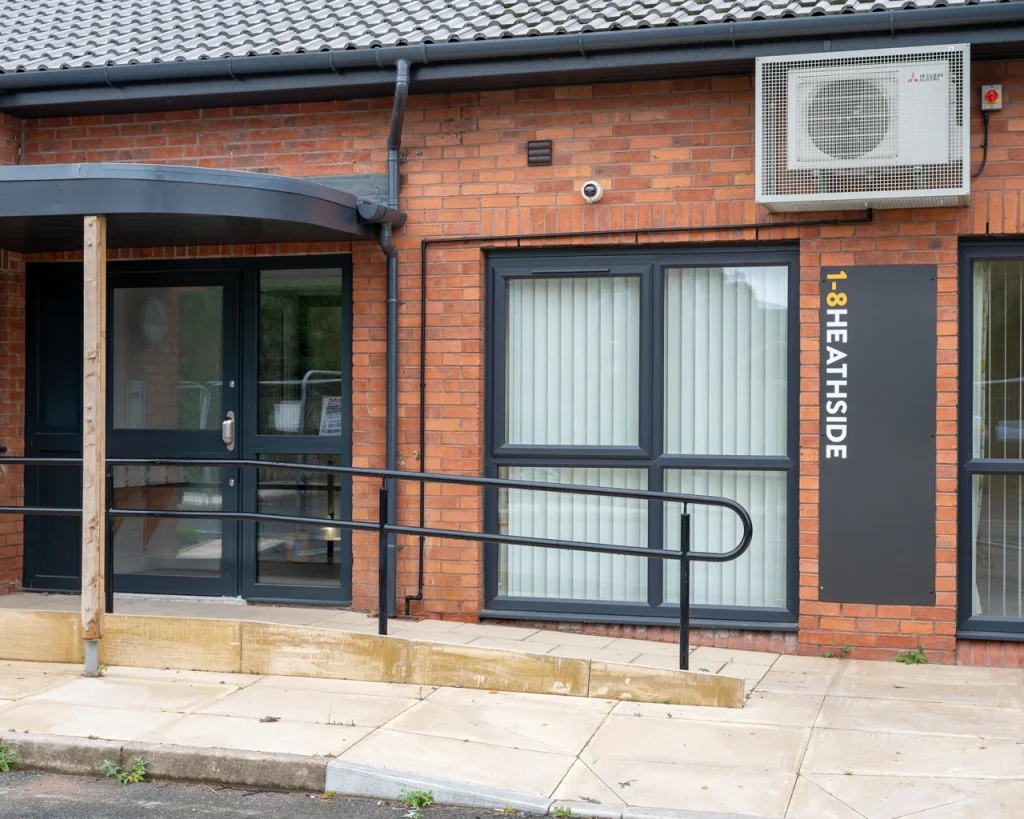

There is a lack of appropriate housing for people with a learning disability or autism who may have behaviours that challenge. Torus, the North West’s largest affordable housing provider worked with St Helens Borough Council (SHBC) and Tunstall Healthcare to transform an unused care home into eight modern, personalised and technology-enabled apartments. Sarah Houghton-Grimshaw, Supported Housing Commission Project Manager for the Heathside development at Torus and Andrea Boughey, Commissioner at St Helens Borough Council tell us more.
The care home at Alexander Court had been out of use for some time, so when reviewing the options for its future we looked to identify the area of greatest need. We recognised that there was an opportunity to provide more accommodation for people with learning disabilities, autism or mental health needs in the borough, and so the concept of Heathside began.

A home of their own
The idea was to enable people who may have been living in services outside of St Helens, or in residential care or in NHS settings, to be able to have a home of their own in the borough, and live as independently as possible. Torus and SHBC submitted a joint bid for NHS funding to refurbish the care home to a high standard, including using the latest technology to support the people who would live and work there. Fortunately, our bid was successful, and so we began looking at criteria and specification. The overarching aim was to give people freedom of movement and enhanced independence within their own apartments, and it was clear that technology had a massive role to play in that.
Having both had experience of technology enabled care, we knew how important it was that tech was integral to the design of the building and the service, rather than being an ‘add on’ once construction was finished. We also knew that we needed a technology partner who could help us get this right. What we really liked about Tunstall’s proposal was that it wasn’t a one size fits all approach. They have years of experience working on projects like these, and were very aware that technology needed to be personalised and adaptable. All stakeholders and suppliers worked really well together, focused on a common goal. Tunstall met, and exceeded, all of our requests, and their expertise was invaluable. In fact, there’s technology in the building that we didn’t even know existed! For example, the laser beams that detect movement in doorways, and anti-ligature devices on doors and windows.
Keep it simple
As well as the more advanced and interoperable technology, there are more simple devices that can enable a least restrictive approach. For example, providing a medication dispenser to prompt the user to take the right medicine at the right time, or providing a tablet so someone can order their own shopping online both reduce the need for them to wait for a support worker to help them do this. This supports the independence of the people we’re supporting, and also means support workers can concentrate more on added value tasks. As well as reducing stress for support workers, so helping with recruitment and retention, this approach is focused on enablement and maintaining health. Part of the aim is to create a level of support that not only improves quality of life, but also wellbeing, and therefore reduces hospital admissions.
Unobtrusive care
We speak to the people who use our services on a regular basis, and their feedback is that they’re very comfortable with a blend of traditional support and technology. The brilliant thing about the latest technology is that it’s almost invisible, so the people living at Heathside can feel no different to anyone else living in an apartment.
We’re really excited that we can take the learning from this on to future projects. This is the way the supported housing of the future needs to look, and Tunstall and their technology is at the heart of what we’re doing.